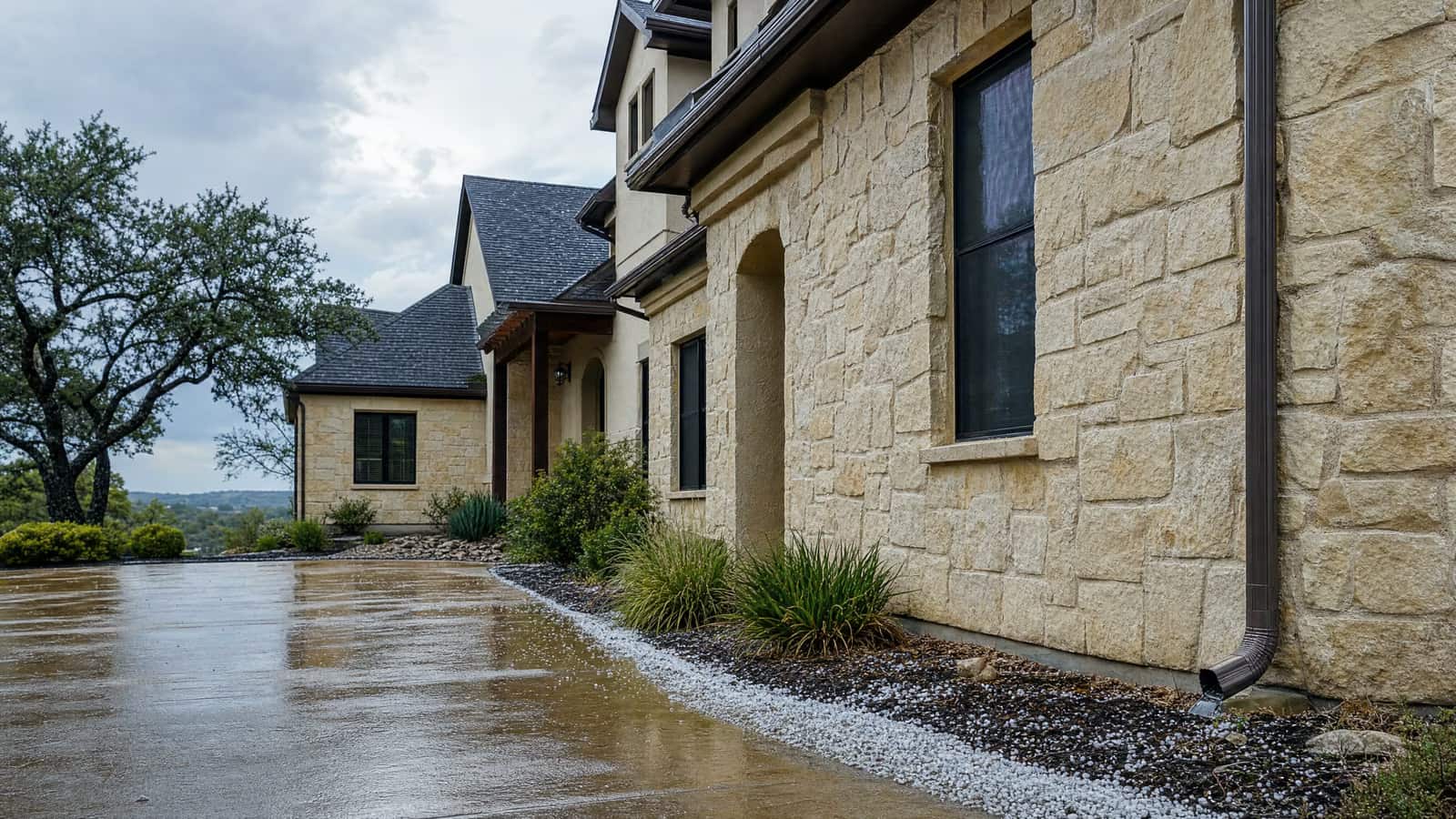
After a hailstorm, handle safety and active water first, then document visible conditions before deciding whether roofing work or an insurance conversation is needed. Not every hail event creates functional roof damage, and many important conditions are not visible from the ground.
1. Check immediate safety
Stay away from fallen lines, broken limbs, wet electrical areas, loose exterior materials, and visibly unstable structures. Do not climb onto a wet or steep roof. If water is entering, move belongings only when it is safe and avoid ceiling areas that are bulging or near electrical fixtures.
2. Document what you can see from the ground
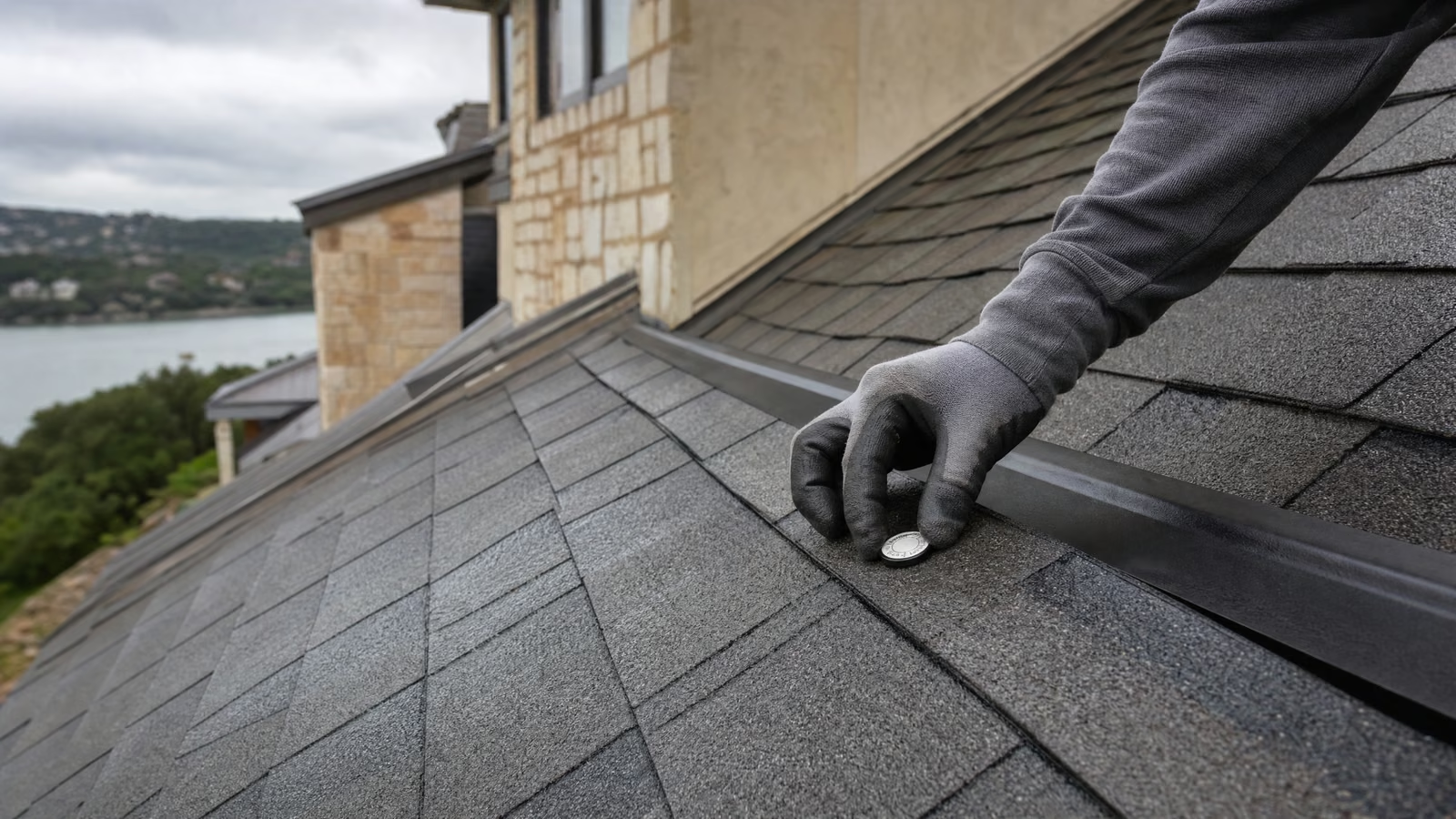
Record the date and approximate time of the storm. Photograph hail beside a familiar object, affected gutters or downspouts, displaced roofing, fallen branches, interior water, and damaged property without entering an unsafe area. Keep original files with their timestamps.
3. Limit active water without creating another hazard
Use containers and move belongings where safe. A temporary dry-in may be appropriate when an opening is allowing water into the home, but roof access should be left to trained workers with proper equipment. Keep receipts and photos of temporary measures.
4. Arrange a complete roof inspection
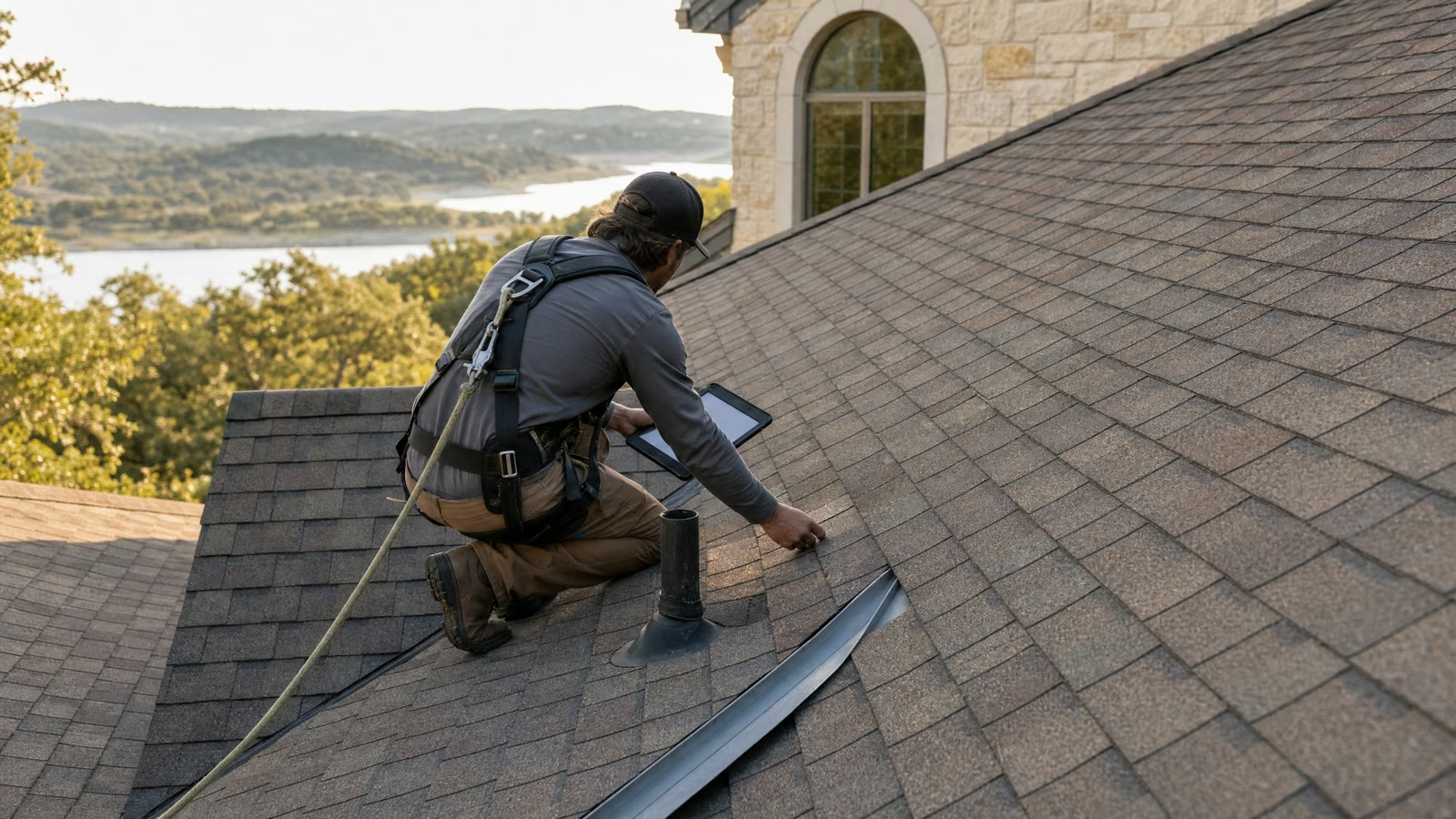
The inspection should include field roofing, ridges, valleys, roof edges, flashing, vents, penetrations, gutters, soft metals, and accessible attic or interior indicators. Ask for dated photos and a plain-language explanation of what was observed, what was not accessible, and what next step is recommended.
5. Separate cosmetic observations from functional damage
A mark or dent does not automatically mean the roof covering has lost function. Functional concerns can include cracks, splits, displacement, exposed underlayment, failed seams, openings, or details that no longer shed water correctly. Material type, age, installation, and the storm pattern all provide context.
6. Decide whether to contact the carrier
Review the documented roofing condition and your policy. The insurance carrier decides coverage. Lakeway Roofing can document observed conditions and provide a repair or replacement scope, but we do not interpret policy language, promise an outcome, negotiate coverage, or act as a public adjuster.
7. Keep the deductible rules clear
Texas law requires the homeowner to pay the insurance deductible. A contractor cannot waive, absorb, rebate, or otherwise promise to cover it. The Texas Department of Insurance recommends checking references, insurance, written contracts, and payment terms before hiring.
8. Compare repair and replacement based on the roof
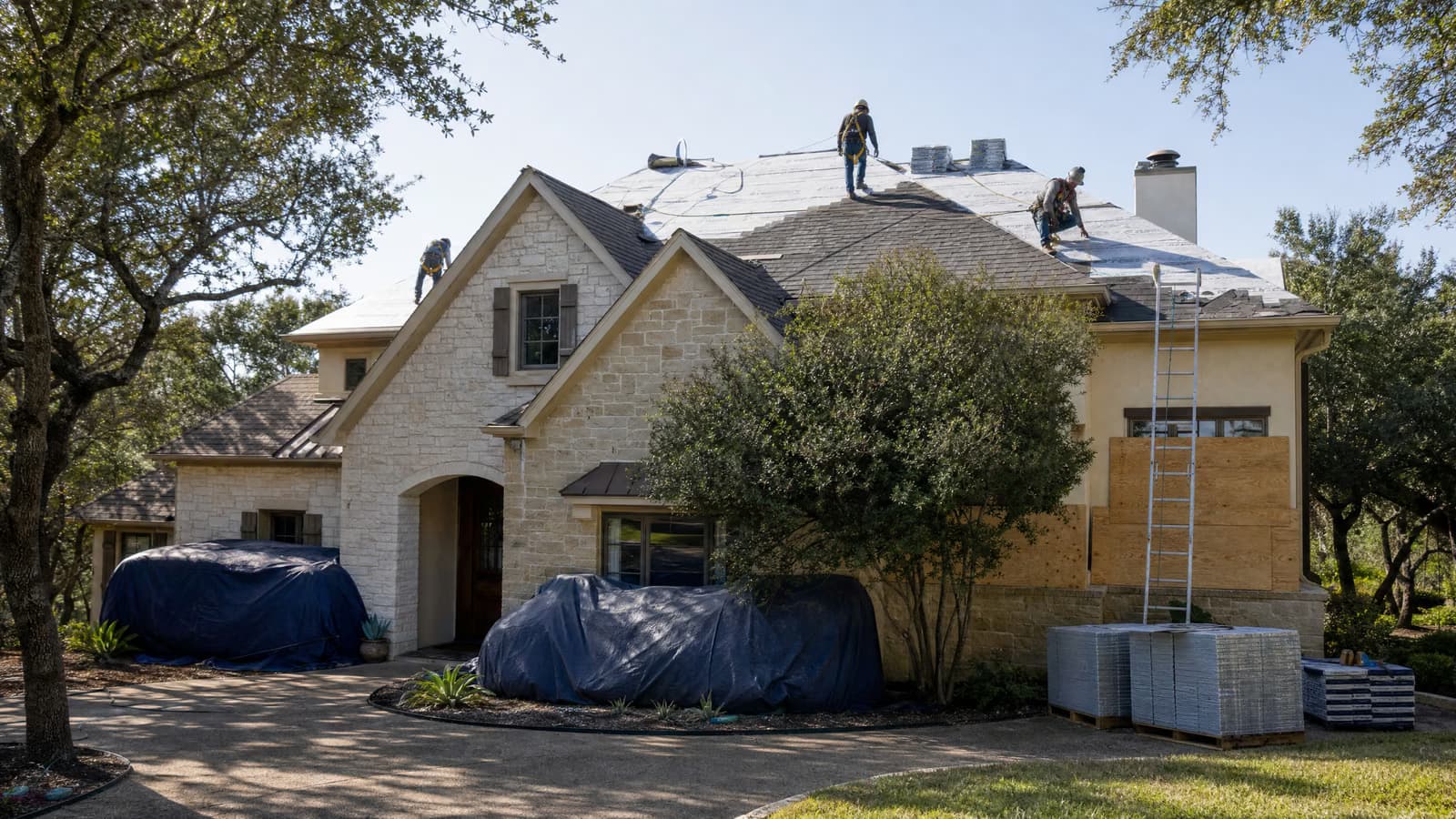
A localized wind or impact condition may accept a durable repair when the surrounding roof remains serviceable. Replacement deserves comparison when functional damage or deterioration is widespread, matching is impractical, moisture extends beyond one zone, or the existing assembly cannot accept a reliable repair.
Post-hailstorm next-step checklist
- Stay off the roof and avoid electrical or structural hazards.
- Record the storm date and photograph visible conditions safely.
- Limit active water and keep temporary-work receipts.
- Request a roof and accessible-attic inspection with photos.
- Read your policy and speak with the carrier about coverage questions.
- Compare a written repair or replacement scope before authorizing work.
- Verify contractor insurance and never accept a deductible-waiver offer.
Read the storm damage service guide, compare roof repair with roof replacement, or schedule a free homeowner roof inspection.
Printable homeowner resource
Lakeway and Lake Travis post-hail checklist
Use this sequence after hail, wind, or sudden water entry. Safety and active-water control come before roof documentation.
Technical sources
These references support the technical review. Roofing and policy decisions still depend on the specific property, product documentation, and current policy language.