Lakeway Roofing

Lakeway Roofing | Greater Austin

Commercial Roofing for Greater Austin Properties

Commercial roofing decisions begin with the building, its drainage, existing assembly, penetrations, tenant or operating needs, and maintenance history. TPO is common on low-slope properties, but it is not the only system and it is not automatically the right answer.

Call (512) 270-8084
Rated 5 stars on GoogleFamily owned | Insured | Written scopes
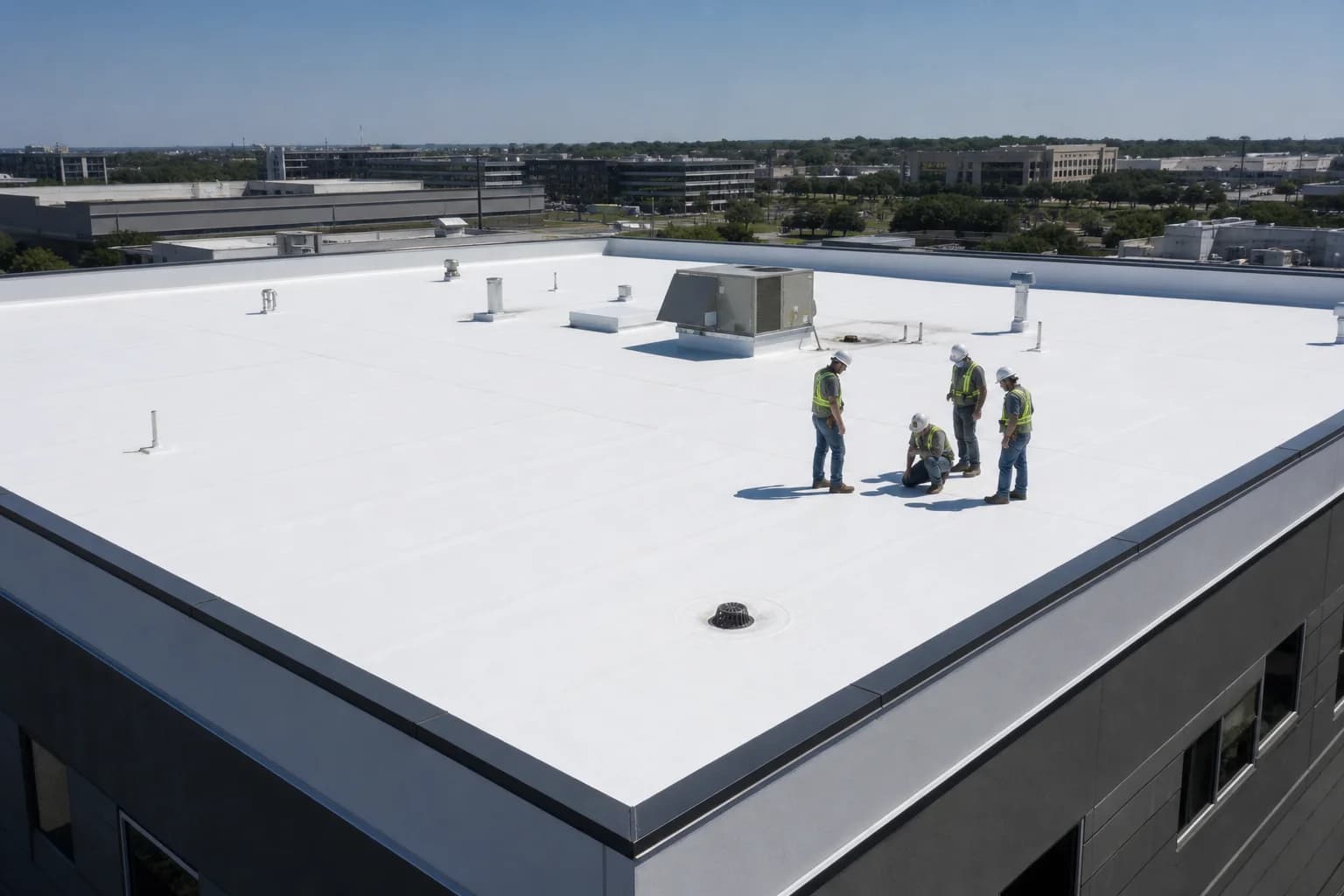
White TPO membrane roof with drains and rooftop equipment
Photo-led assessmentClear next steps
InsuredCurrent certificate available
Free inspectionPhotos and practical options
Written scopeKnow what is proposed
FinancingAvailable for qualifying projects

Lakeway Roofing inspects, repairs, replaces, and maintains commercial roofs for offices, retail properties, restaurants, warehouses, and light-industrial buildings across Greater Austin. Each recommendation is documented around the actual roof and property schedule.

A useful commercial inspection separates isolated repair opportunities from drainage, membrane, flashing, coating, or substrate conditions that require a broader plan.

Start with evidence

What the inspection covers

We look beyond the most visible symptom so the recommendation reflects the roof system and the property around it.

Field membrane or metal panels
Seams, flashing, and edge details
Drains, scuppers, and ponding areas
Curbs, penetrations, and rooftop equipment interfaces
Traffic and prior repair areas
Visible deck or interior moisture indicators

Know when to call

Signs a commercial roof needs attention

Low-slope systems often show small exterior changes before an interior disruption.

01

Ponding water remains after normal drainage time

02

Open seams, punctures, blisters, or displaced flashing

03

Interior staining near drains, curbs, or rooftop equipment

04

Coating wear, exposed reinforcement, or membrane shrinkage

05

Loose edge metal or storm-affected rooftop components

06

Repeated repairs in the same zone

Compare the options

A practical decision guide

Commercial recommendations should account for the assembly, moisture, drainage, rooftop traffic, access, and operating needs together.

Repair or maintenance may fit

  • Failure is localized
  • Surrounding assembly remains serviceable
  • Moisture has not spread through the system
  • Drainage and substrate do not require broad correction

Restoration or replacement needs comparison

  • Leaks repeat across several zones
  • Seams or materials are failing broadly
  • Moisture is widespread
  • The assembly no longer accepts a reliable repair

Materials and systems

Commercial roof systems handled

The existing assembly and building needs determine the appropriate path.

TPO and single-ply

Membranes, seams, attachment, flashing, drains, and penetrations are evaluated as one system.

Modified bitumen

Surface condition, laps, flashings, transitions, and prior repairs determine the practical next step.

Coatings

A coating is considered only when the existing roof and substrate are suitable for restoration.

Commercial metal

Panels, seams, fasteners, edges, penetrations, and drainage details are assessed together.

TPO and other single-ply membrane conditions
Modified bitumen and built-up roof details
Commercial roof coatings where the substrate qualifies
Standing-seam and exposed-fastener metal systems
Shingle or tile sections tied into low-slope areas
Drains, scuppers, curbs, penetrations, edges, and transitions

From question to closeout

Commercial inspection to closeout

  1. 01

    Property intake

    We review access, operations, known leak history, and the existing roof system.

  2. 02

    Roof assessment

    Membrane or panels, seams, drainage, edges, curbs, penetrations, and transitions are documented.

  3. 03

    Option review

    Repair, maintenance, restoration, and replacement paths are compared where they are practical.

  4. 04

    Written scope

    Materials, access, sequencing, responsibilities, and expected disruption are defined.

  5. 05

    Work and closeout

    Approved work is coordinated with the property, cleaned, checked, and documented.

Scope and pricing

What affects a commercial scope

Roof area, access, operating constraints, drainage corrections, moisture, penetrations, substrate condition, material, and sequencing all influence scope and price.

A targeted repair can be the right answer when the surrounding system remains serviceable. Replacement or restoration deserves comparison when failures repeat, moisture is widespread, or the assembly can no longer be repaired reliably.

Homeowner guidance

Practical low-slope roof decisions

TPO versus other systems

TPO can be a practical heat-reflective single-ply option, but existing substrate, attachment, drainage, rooftop traffic, penetrations, and project goals determine whether TPO, another membrane, coating, metal, or repair is appropriate.

Ponding water is a drainage clue

Standing water can stress seams, coatings, and details. The inspection should identify why water remains rather than treating every stain as a membrane-only problem.

Maintenance reduces avoidable disruption

Periodic checks of drains, seams, penetrations, curbs, traffic areas, and edges can surface maintenance needs before they become tenant interruptions. Review our roof maintenance page.

Rated 5 stars on Google

Read the homeowner feedback behind the rating, including repairs, replacements, communication, and project closeout.

Read homeowner reviews

Lakeway Roofing is hands down the best roofing services provider in the area! If you're searching for roofing services near me, look no further. This top-rated roofing company exceeded my expectations with their expertise and dedication.

Chris Castaldini | Google review

Straight answers

Commercial Roofing FAQs

These answers explain the decision factors. The property inspection supplies the final context.

No. Commercial properties may use TPO or another single-ply membrane, modified bitumen, built-up roofing, coatings, metal, or mixed systems. The existing assembly should be identified before a recommendation.

Sometimes. The answer depends on drainage layout, insulation or substrate slope, drain condition, membrane condition, and whether moisture has entered the assembly.

Often, yes. Access, noise, odor, tenant safety, weather, and rooftop equipment may affect sequencing, so operating constraints are included in the written plan.

It typically includes the field membrane or panels, seams, drains, scuppers, edge metal, curbs, penetrations, flashing, traffic areas, and visible interior or deck indicators available for review.

Inspection frequency depends on the system, condition, traffic, weather exposure, and property risk. A practical schedule can be set after the baseline assessment.

Clear answers start here

Request your free homeowner roof inspection

Tell us what you are noticing. We will help you choose the practical next step.

Call (512) 270-8084