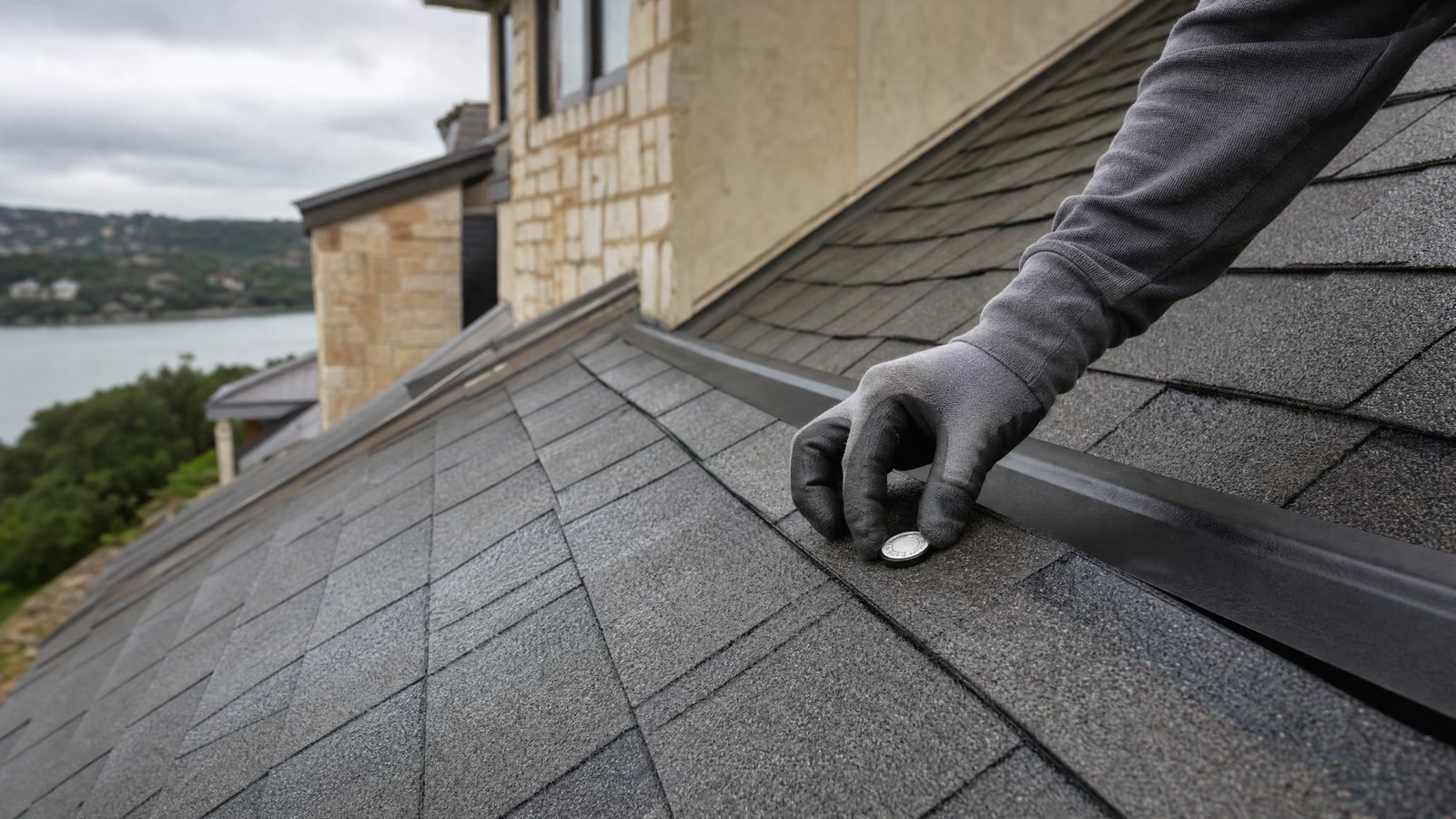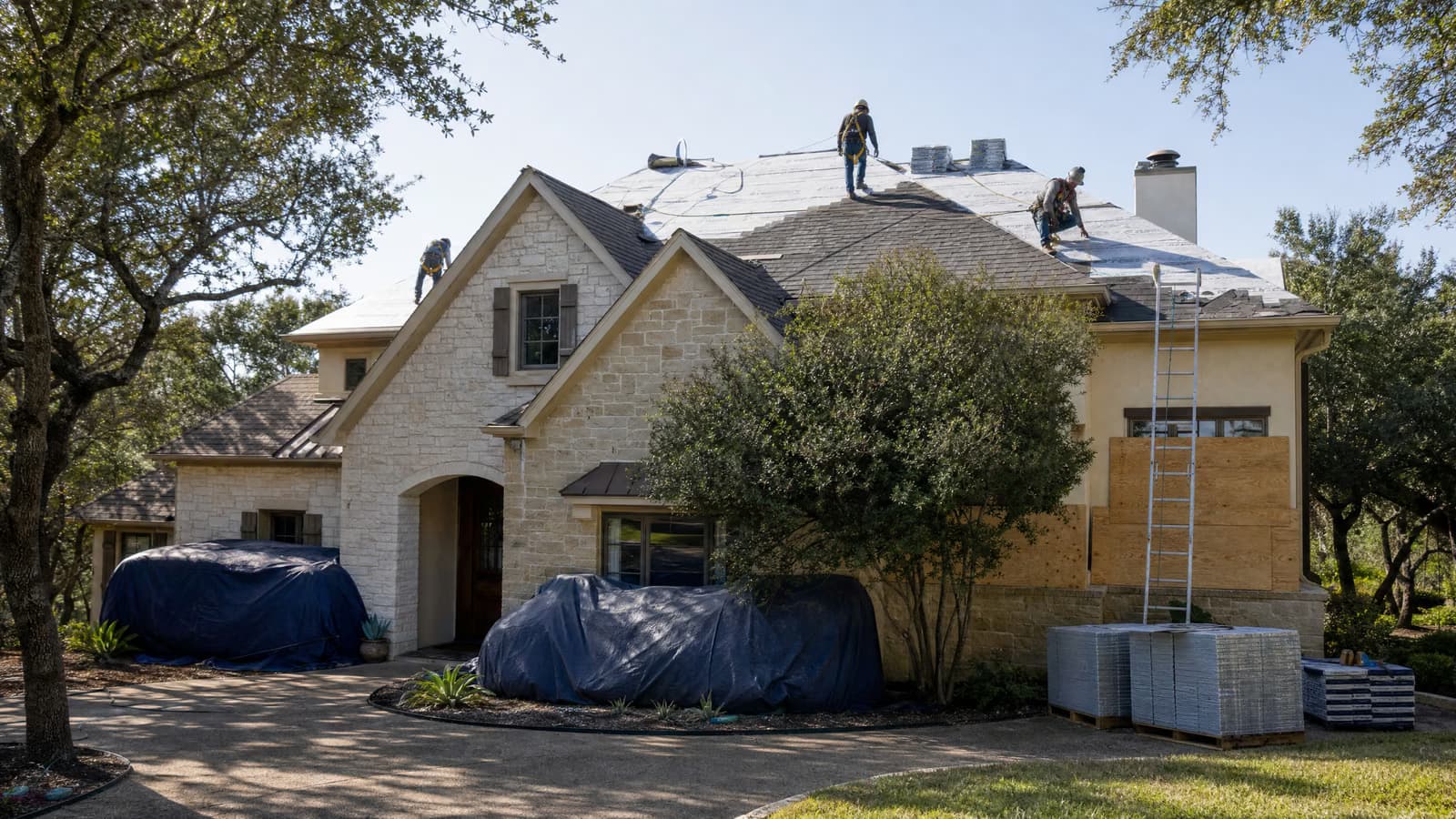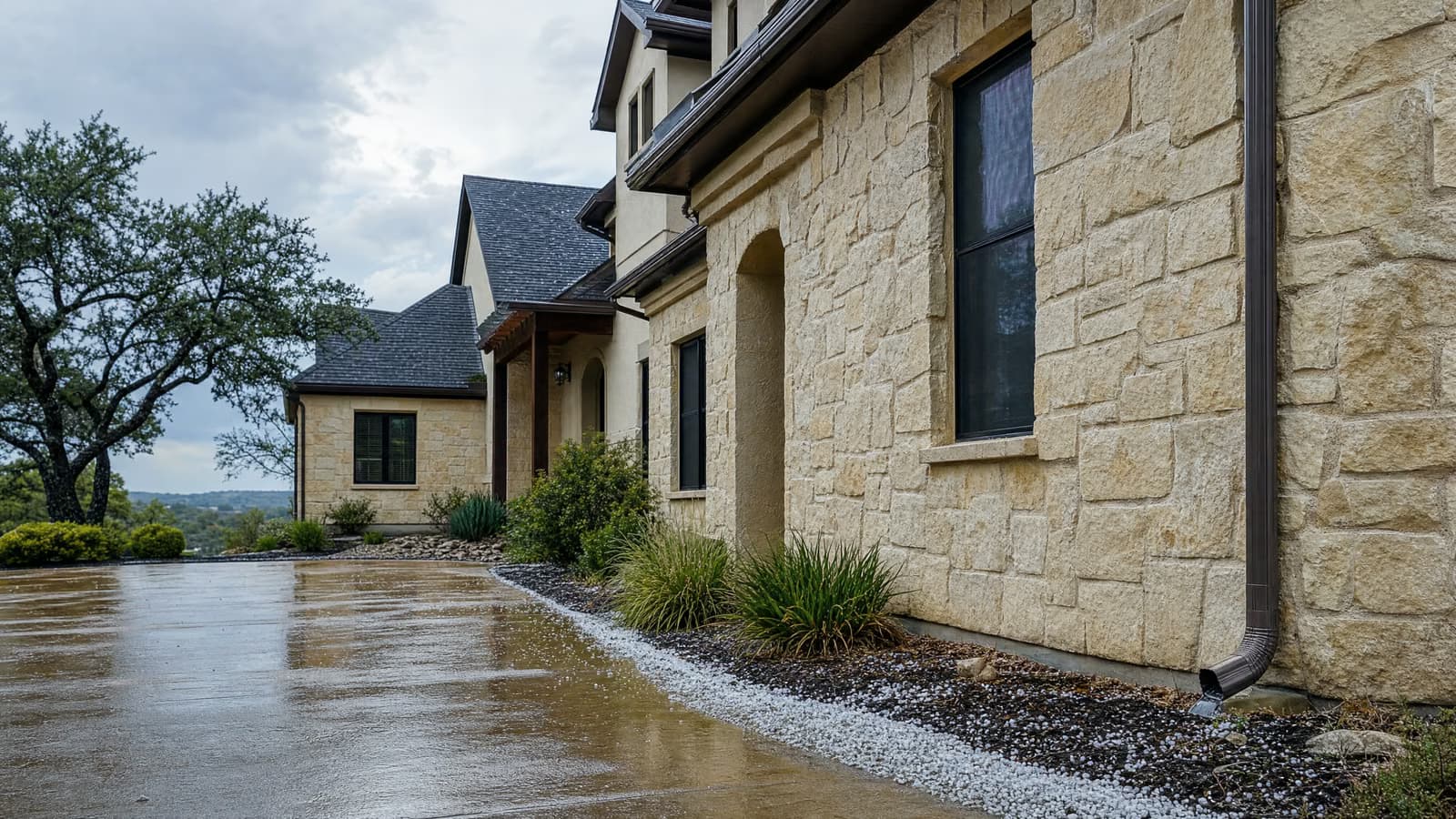
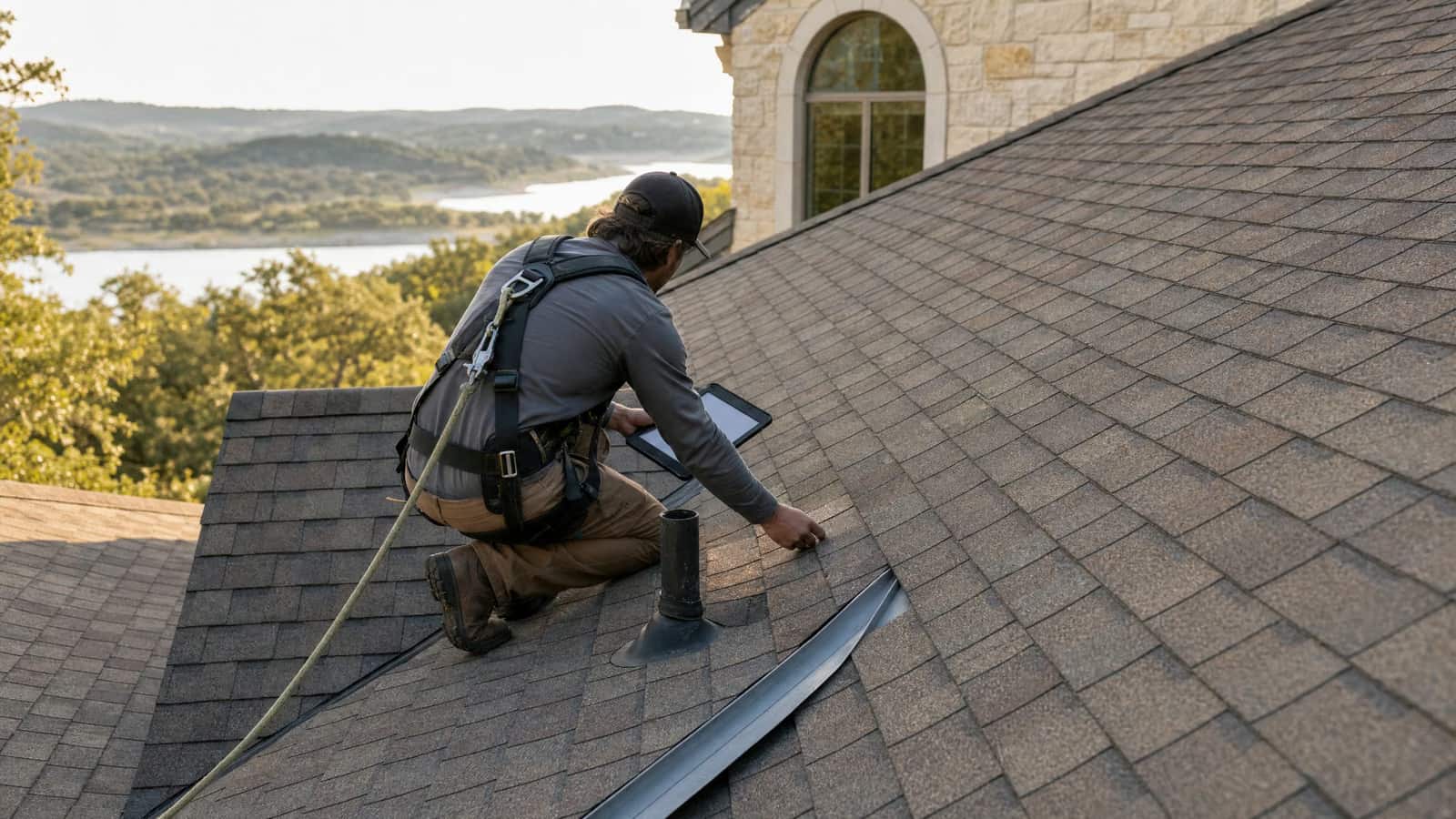
Repair is usually the practical choice for a localized failure on an otherwise serviceable roof; replacement deserves comparison when deterioration or damage affects the system broadly. A useful recommendation starts with the whole roof, not only the first visible leak.
Quick repair-versus-replacement decision table
| Inspection finding | Repair may fit | Replacement may fit |
|---|---|---|
| Damage pattern | One defined area or component | Several slopes or repeating locations |
| Surrounding material | Flexible, secure, and serviceable | Brittle, curling, broadly worn, or difficult to integrate |
| Water entry | One traceable source | Multiple sources or widespread moisture indicators |
| Decking | Localized affected section | Broad softness, sagging, or repeated deck concerns |
| Prior work | Few repairs with sound transitions | Recurring repairs no longer solve the underlying issue |
Signs a focused roof repair may be enough
- A pipe boot, flashing detail, vent, or short section has failed.
- A limited group of shingles is missing, lifted, or damaged.
- The leak source can be traced and nearby materials remain serviceable.
- A compatible material can be integrated without creating a weak transition.
- Decking and moisture concerns appear limited to the repair area.
A repair should address the water path and failed detail, not only cover the visible symptom. Ask what material will be removed, what will be replaced, and how the new work ties into the existing roof.
Signs replacement deserves a full comparison
- Leaks or prior repairs appear in several areas.
- Shingles are brittle, curling, cracked, or losing granules broadly.
- Flashing, ventilation, drainage, or transitions need system-wide correction.
- Material is no longer available or cannot be integrated reliably.
- Soft decking, moisture, or sagging extends beyond one repair zone.
Roof age is context, not a diagnosis. A younger roof can have a broad failure, while an older roof may still have a repairable local condition. The physical inspection should lead the recommendation.
What the inspection should compare
The assessment should review roof covering, valleys, ridges, edges, flashing, penetrations, drainage, ventilation, and accessible attic indicators. It should also consider material availability, previous repairs, roof geometry, and whether the proposed work can be completed without creating a fragile transition.
How hidden decking affects the decision
Some deck damage is visible from an accessible attic, but the complete condition is not known until roofing material is removed. A written scope should state how unexpected decking is documented, priced, and approved. Photos and homeowner approval should come before unplanned work proceeds.
Material and system considerations
Architectural shingles, impact-resistant shingles, standing-seam metal, exposed-fastener metal, tile, and low-slope sections have different repair details. Underlayment, flashing, edge metal, fasteners, ventilation, and penetrations must remain compatible with the chosen surface material.
Compare cost without relying on a generic price
Roof area, pitch, access, material, repair location, tear-off, disposal, flashing, ventilation, and decking all affect price. A small repair costs less today, but repeated work on a broadly failing roof can be poor value. Replacing a serviceable roof because of one correctable detail can also spend money unnecessarily.
Homeowner decision checklist
- Ask for photos and the likely source of the problem.
- Confirm whether the condition is local or system-wide.
- Compare written repair and replacement scopes when both are practical.
- Review exclusions, deck allowances, materials, access, and cleanup.
- Consider expected service, disruption, and plans for the property.
Explore roof repair, compare the roof replacement process, or start with a free homeowner roof inspection.
Central Texas decision tool
Roof repair or replacement planner
Organize the condition, repair history, material, and moisture questions that should shape a property-specific recommendation.
Answer all four questions to organize the conditions a roofer should verify. The result is a discussion guide, not a roof diagnosis.
This planning tool cannot see the roof, attic, flashing, or hidden decking. It does not provide an estimate, engineering opinion, or insurance determination.
Technical sources
These references support the technical review. Roofing and policy decisions still depend on the specific property, product documentation, and current policy language.